





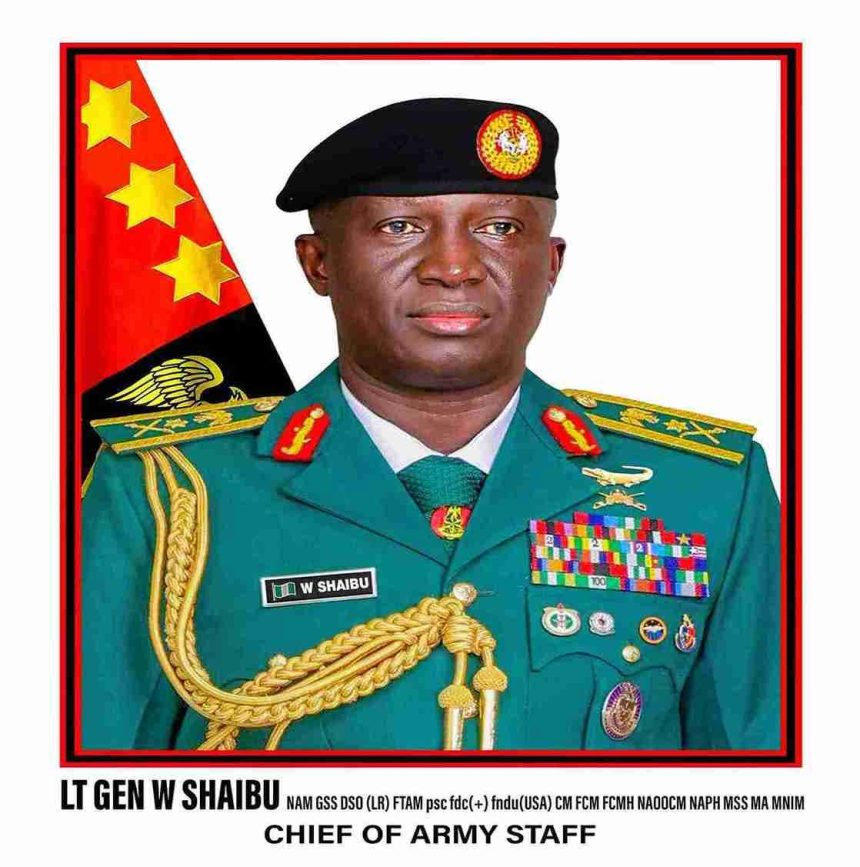
The Chief of Army Staff (COAS), Lieutenant General Waidi Shaibu, has announced plans to recruit and train 24,000 soldiers to enhance the operational capacity of the Nigerian Army amid persistent security challenges across the country.
The announcement was shared on X on Wednesday by Zagazola Makama, a counter-insurgency security expert.
Shaibu revealed the plan during an operational visit to the 1 Division of the Nigerian Army in Kaduna, where he addressed officers ranging from second lieutenants to lieutenant colonels. He described the initiative as part of the Army’s broader strategy to improve readiness and expand manpower for deployments nationwide.
The COAS said that three new training facilities, approved by President Bola Ahmed Tinubu, will initially train 12,000 soldiers within six months. The facilities have the capacity to double output to 24,000 if two training streams are run simultaneously.
Shaibu noted that the facilities are strategically positioned to produce recruits equipped with modern warfare skills, tactical knowledge, and advanced weapon handling. He emphasized that the focus is not only on increasing troop numbers but also on ensuring high-quality, professional training.
The recruits will undergo instruction in basic tactics, combat operations, and leadership principles to reinforce the Army’s professional standards. The COAS also reiterated the Army’s commitment to the “Soldier First” concept, promising improved welfare and support systems for both new and existing personnel.
He urged senior officers to mentor incoming recruits to sustain discipline, uphold core values, and maintain operational excellence.
The recruitment drive is expected to significantly bolster manpower, strengthen troop deployments in critical areas, and enhance the Army’s capacity to respond effectively to security threats nationwide.
During his visit, Shaibu also held discussions with officers on operational logistics, welfare initiatives, and ongoing efforts to improve the Army’s capabilities in the North West and other theatres of operation.