





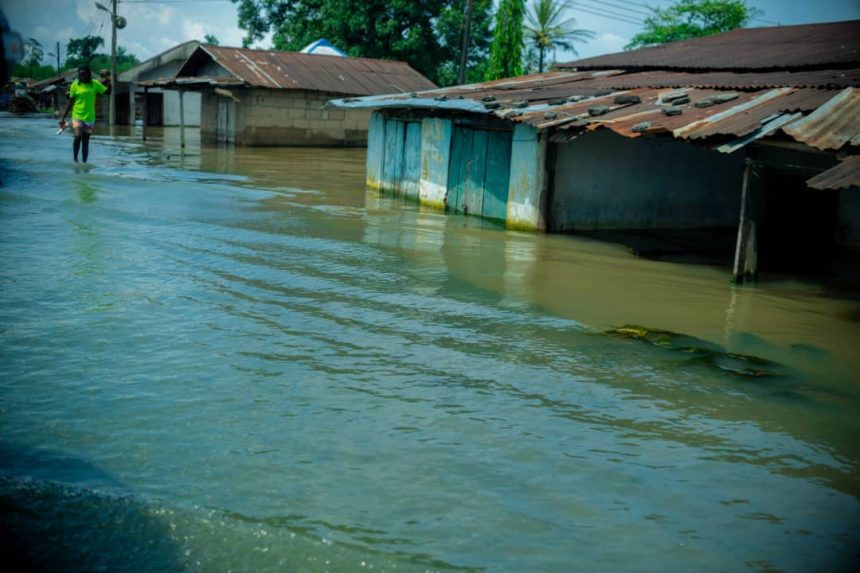
The Nigeria Hydrological Services Agency (NIHSA) has raised alarm over a significant flood wave currently propagating downstream as Rivers Niger and Benue approach their peak levels, with several major dams across the country recording surging water volumes.
The agency cautioned that the development poses a serious flood risk to downstream communities, many of which are already struggling with seasonal flooding from the peak of the rainy season.
In a statement on Thursday signed by its Director-General, Umar Mohammed, NIHSA explained that the tributaries of the two major rivers—Rima, Kaduna, and Gongola—have also reached critical levels, further increasing the likelihood of overflow.
According to the statement, Kainji Dam is already spilling excess water, with its reservoir level recorded at 138.69 metres. Nearby communities identified at risk of flooding include Kainji town, Patigi, New Bussa, Borgu, Mokwa, and other communities along River Niger in Niger and Kwara States.
The agency added: “Jebba Dam is spilling excess water. Nearby communities at risk of flooding are Jebba town, Gungu, Gana, Fanga, Bele, Bere, Gaba, Baro, and communities along River Niger in Kwara and Kogi States. Zungeru Dam: Not spilling.
“Goronyo Dam is spilling at maximum rate, causing flooding to surrounding communities in Sokoto State, especially Goronyo, Wamako, Shinaka Yerimawa, Kurukuru, and environs. Kiri Dam is spilling excess water, causing flooding to nearby communities in Adamawa State such as Kiri, Tallum, Banjiram, Purokayo-Lakumna, and Shelleng.”
NIHSA noted that while Lagdo Dam in Cameroon is not spilling, “heavy rainfall and internal runoff in its catchment is causing flooding in Adamawa State, especially in Yola North and South, Girei, and Numan.”
The agency urged communities along Rivers Niger and Benue to remain vigilant and take urgent steps to safeguard lives and property.
“Given the current high reservoir levels and river flows, communities along Rivers Niger and Benue should take proactive measures to protect themselves. NIHSA is working closely with dam authorities to reduce the impact of possible flooding on downstream populations,” the statement read.
This warning comes amid growing fears that flooding in 2025 may mirror or even exceed previous years, when hundreds of communities were displaced and farmlands destroyed, leaving widespread humanitarian and economic losses in its wake.