


By Faith Madogwe
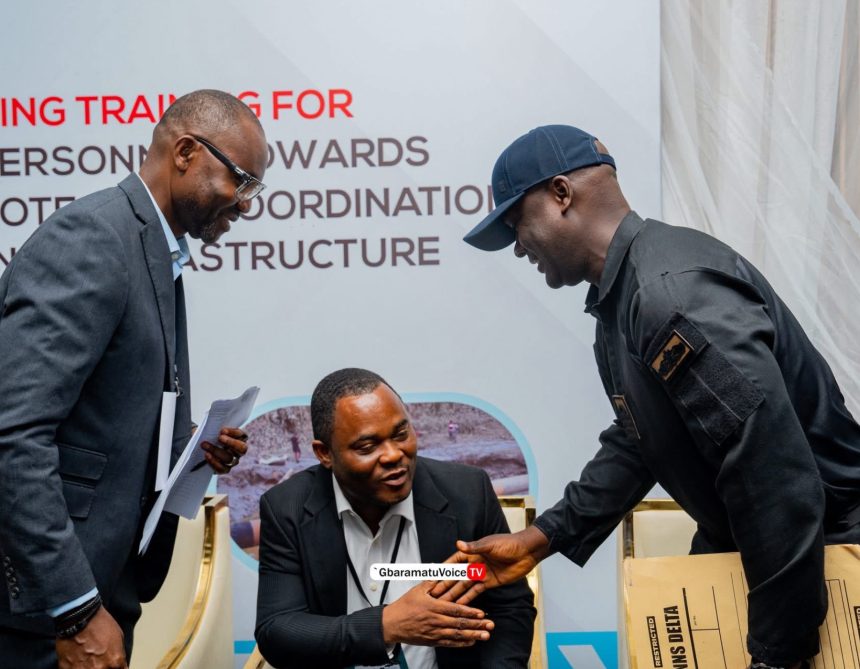
For three days, the Jubilee Event Centre in Effurun, Delta State, became a hub of learning, strategy, and renewed commitment to securing Nigeria’s oil and gas assets. Coordinators of Tantita Security Services Nigeria Limited (TSSNL) sat side by side with officers of the Nigeria Security and Civil Defence Corps (NSCDC), sharpening their knowledge in a capacity-building programme that ended on Wednesday, August 21.
The training, facilitated by Top Private Security Services Ltd, was far from a routine seminar. It combined lectures, syndicate work, and practical sessions that challenged participants to rethink how they approach security operations. Modules ranged from Oil Asset Surveillance and Legal Applications to Threat Assessment, Risk Management, and Civil-Military/Paramilitary Liaison.
One session that stood out was Dr. Emmanuel Ekpoto’s lecture on conflict sensitivity. Participants broke into syndicates, delivering presentations and fielding tough questions from colleagues—an exercise that reinforced collaboration under pressure.
But beyond the technical drills, the training became a space for reflection. “This training is the theory part, what matters now is practice,” said Ms. Daisy Jaja, TSSNL’s Admin Manager. “Most of the participants are coordinators, so it is a ‘train the trainers’ exercise. They must return to the field, teach their teams, and ensure what has been learned is implemented.”
Technology was another highlight. Jaja underscored the role of tools such as drones in reducing the burden on personnel while providing quicker surveillance and early warning in high-risk areas.
For many participants, the experience was transformative. “From day one, we were told we would learn, unlearn, and relearn—and that is exactly what we did,” said Cassidy Eni Christian, Pipeline Administrator and Tantita Coordinator, speaking on behalf of his colleagues. “We are better prepared to deliver in the field.”
The NSCDC participants shared similar sentiments. ASC1 Luther Obidah from Bayelsa called the training “tremendous,” adding that lessons on intelligence gathering, operational planning, and civil-military relations would strengthen their operations. “This kind of training should be routine, extended to all formations, because it is so impactful,” he noted.
What made the programme unique was its focus on both hard and soft security skills. Participants did not just learn how to guard pipelines—they explored how to build relationships, resolve conflicts, and apply technology in ways that save time and reduce risks.
As certificates were presented on the final day, there was a sense that the participants were leaving with more than documents. They were leaving with tools, ideas, and renewed confidence to protect Nigeria’s vital oil and gas infrastructure.
And for an industry often defined by volatility, that confidence may prove just as important as any piece of equipment on the field.