



By Segun Adebowale
“Your long-term happiness and fulfillment depend on your ability to fulfill your soul’s unique purpose and to fill the place in the world that only you can fill, making the contribution that only you can make.” – Rod Stryker
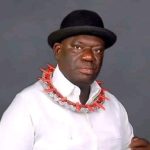
Roy Stryker’s quote above strikes the very cord that aptly describes the person of Chief Dennis Otuaro. It’s not uncommon to see people from significantly humble backgrounds become successful, but this mostly happens with people who believe in their dreams and muster the tenacity and courage to make them reality.
History has proven how true this is by the practical examples of the life of successful people, all over the world; some riding on the back of already established wealth and relationships that became subservient to their goals or destiny, while for others, success was achieved through sheer doggedness, determination, resilience and passion in the face of daunting odds.

Chief Dennis Otuaro’s story is an inspiration that young people everywhere can take a cue from, as it teaches how focus, resilience, hard work, taking advantage of opportunities at the right time, as well as trust in God, are important pillars for success and fulfillment, despite where one may find oneself in life.
Early Life
In his pre-teen age, Dennis Otuaro was but only a young man with dreams, a great passion for success and a lot of resilience.
Otuaro lost his parents at the very tender age of eight, but even at that young age, he knew he didn’t want to end up like most people who took such a disadvantage as an excuse to wallow in penury. He resolved that nothing was going to stop him from making it in life; not the rigours of the hard life, not the emptiness of being devoid of parental warmth and care, not peer pressure or any other factor.
In his words, “Having lost my parents at the age of eight, I started living on my own. When you are surviving at that young age on your own, the situation does not necessarily drive you into criminality but makes you focus on what you can achieve. It’s not like nowadays that everybody gives excuses for criminal acts on hard life or the devil.”
Otuaro went through the hard times with grit and determination; he walked through the desert of his dreams for many years building the very foundation that would propel him to the planes he envisioned for himself. Indeed, commitment shakes the very foundation of this universe.
Education
Dennis Otuaro began the journey to his academic excellence in Warri, Delta State where he had his primary education. After his primary education, Otuaro attended the Ogbe-Ijoh Grammar School, Ogbe-Ijoh in Warri West Local Government Area of Delta State where he completed his secondary school education.
He got admitted into the Delta State University and pursued a Bachelor’s Degree programme in Political Science, graduating with Second Class Honours in 2005.
His leadership traits began to manifest while in the University, as Otuaro was involved in student activism, charting ways in which students’ interests would be better served while studying. He was secretary general, National Union of Izon-Ibe (Ijaw) Students (NUIS), Delta State University, Abraka Chapter, Delta State between 2003 and 2004, before taking over as president of the union from 2004 to 2004.
After the completion of his National Youth Service Corps mandatory one year programme, Otuaro embarked on a further course of study at the University of Benin, bagging a Master’s Degree in International Relations in 2008.
Apparently a lover of academics, Otuaro would pursue another Master’s degree in Public Administration at the same university, finishing in 2009.
Determined to go the whole hog, Otuaro applied for his doctorate degree programme at the University of Benin, where he is currently rounding up on Comparative Politics and Developmental Studies. He was awarded a professional certificate on Leadership Challenge in the Contemporary Workplace in 2014 by PROT Consulting.
Professional Engagement
Being one with patriotic fervour, service to fatherland is something Chief Dennis Otuaro finds consummate delight and fulfillment in, as it gives him the opportunity to give back to the society and help impact the lives of people.
With his education and experience, Chief Otuaro has brought this to bear in his various engagements of service, which cut across his state’s government, the federal government, other social bodies and international agencies.
Now involved in developmental activism, Chief Otuaro has served as chief protocol officer to the chairman, Delta State Oil Producing Areas Development Commission (DESOPADEC) from 2007 to 2010; a commission created to improve infrastructure in the oil-bearing areas of Delta State, generate employment, which would potentially ebb and subsequently put to rest the high level of insecurity-related incidents in those parts. He was also a member of the Delta State Waterways Security Council, as well as chairman of the sub-committee on security of the council from 2007 to 2015.
As a stakeholder in the Niger Delta, these experiences gave him the opportunity to help in bridging the communication gap between communities and oil producing companies in the region with the government.
“I was able to bring the youths to understand the projects of the government and the relevance of these programmes for them”.
Chief Otuaro has been a clarion voice for the provision of infrastructure and restoration of the natural environment of the Niger Delta, given the danger of oil spillage and other activities of multinational oil companies affecting the region’s ecosystem. In 2004, during the regime of late President Umaru Yar’Adua, he was appointed a member of the Presidential Committee on the Environment of the Niger Delta, which helped the government of the day understand the environmental challenges of the Niger Delta region and proffered possible solutions to them.
Chief Otuaro has been a clarion voice for the provision of infrastructure and restoration of the natural environment of the Niger Delta, given the danger of oil spillage and other activities of multinational oil companies affecting the region’s ecosystem. In 2004, during the regime of late President Umaru Yar’Adua, he was appointed a member of the Presidential Committee on the Environment of the Niger Delta, which helped the government of the day understand the environmental challenges of the Niger Delta region and proffered possible solutions to them.